The Creative Lie
Everywhere we look, people are advertising their creative wares and trying to sell their art. Creativity is what sells, we are told. Follow your passion. Monetise what you love. Turn your creativity into an income.
It sounds wonderfully simple, but unfortunately, we are being sold a lie.
Yes, there are fortunate people who have managed to leave their day jobs and make a living from their creativity, whether that means writing, painting, jewellery making or hand-knitted jumpers for dogs. They exist. Some of them have even become extremely successful. But they are a tiny minority.
The truth is that we are increasingly encouraged to believe that whatever we create is somehow special, and that the very fact we have created it makes us deserving of an audience. I’m not suggesting that your work isn’t worthwhile. I’m suggesting that we have somehow confused the value of creating something with the likelihood of being rewarded for it.
A lot of people have the creative ability to produce something beautiful, interesting or moving. They write poems. They make music. They paint. They take photographs. They make things with their hands. Creativity is not as rare as we sometimes imagine. We are encouraged to believe that our work must be unique, and therefore must be noticed. Of course, we are all individuals, and there will never be another person exactly like us.
But individuality doesn’t automatically make what we produce extraordinary. There needs to be some perspective. Writers and artists can believe they are doing something slightly out of the ordinary, something special and elevated above the everyday. And in one sense, they are. To spend hours at a keyboard creating a story is a different way of spending your time from walking somebody else’s dog or taking in their ironing. But from an economic perspective, there is nothing inherently more valuable about one activity than another. But here is a hard fact – you might earn considerably more money from the ironing or the dog walking.
And if you really want to know how to make money from your passion, there is another remarkably reliable creative business model. Write a book about how to make money from your passion. Create a course about it. Make a video about it. Sell the dream to people who desperately want to believe that following their passion will inevitably lead to financial freedom. There are millions of potential customers. Sarcasm aside, if you research the person selling books on how to sell books, you will notice that their best-selling book is the one that claims to help you become a best-seller.
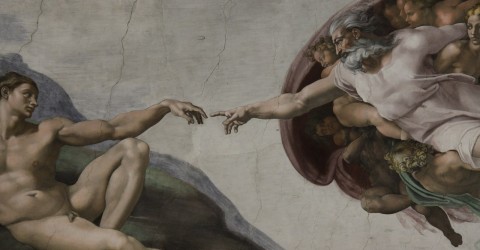
Here’s something else worth thinking about. When Michelangelo painted the ceiling of the Sistine Chapel, he wasn’t operating within the modern mythology of the celebrity artist. The extraordinary cultural status we now attach to artists such as Michelangelo developed over time. Today, we look at the Sistine Chapel and see genius, but in Michelangelo’s time, he was a mere tradesman.
True artistic genius is rare. The fact that we can name the great artists and writers from centuries past should tell us something. We remember them precisely because there weren’t millions of them.
The same applies to authors. There are writers whose work becomes part of the cultural landscape. There are masterpieces that survive generations. There are authors who make a living entirely from their books. But for every one of those writers, there are many more who write brilliantly and struggle to earn enough to fill the car with petrol.
We are constantly encouraged to believe that we could be one of the elite. Perhaps we could. But the possibility is not the same thing as the probability. I can’t be the only person who has listened to the ‘live your passion’ brigade encouraging us to throw in the day job, follow our dreams and trust that the money will somehow follow. You will always hear the stories of the people who took the leap and succeeded. You won’t hear nearly as much about the people who took the same leap and discovered that passion doesn’t pay the mortgage.
Their stories are less exciting and far less useful to someone selling a dream, and this is the point I am trying to make.
There is a dangerous idea circulating in the creative world: that if you are sufficiently passionate, sufficiently talented and sufficiently determined, success will eventually find you. It might. But it doesn’t have to.
Your creative work can be valuable without becoming commercially successful.
You can write a book that matters to you even if very few people read it.
You can paint something beautiful that never hangs in a gallery.
You can make something simply because you wanted it to exist.
Perhaps that is the part of the creative life we have forgotten.
Creativity doesn’t have to justify itself through money.
It doesn’t have to make us famous.
It doesn’t have to prove that we are special.
It’s okay to believe that success could happen.
Just don’t make the mistake of believing that it should happen.
There is a huge difference.